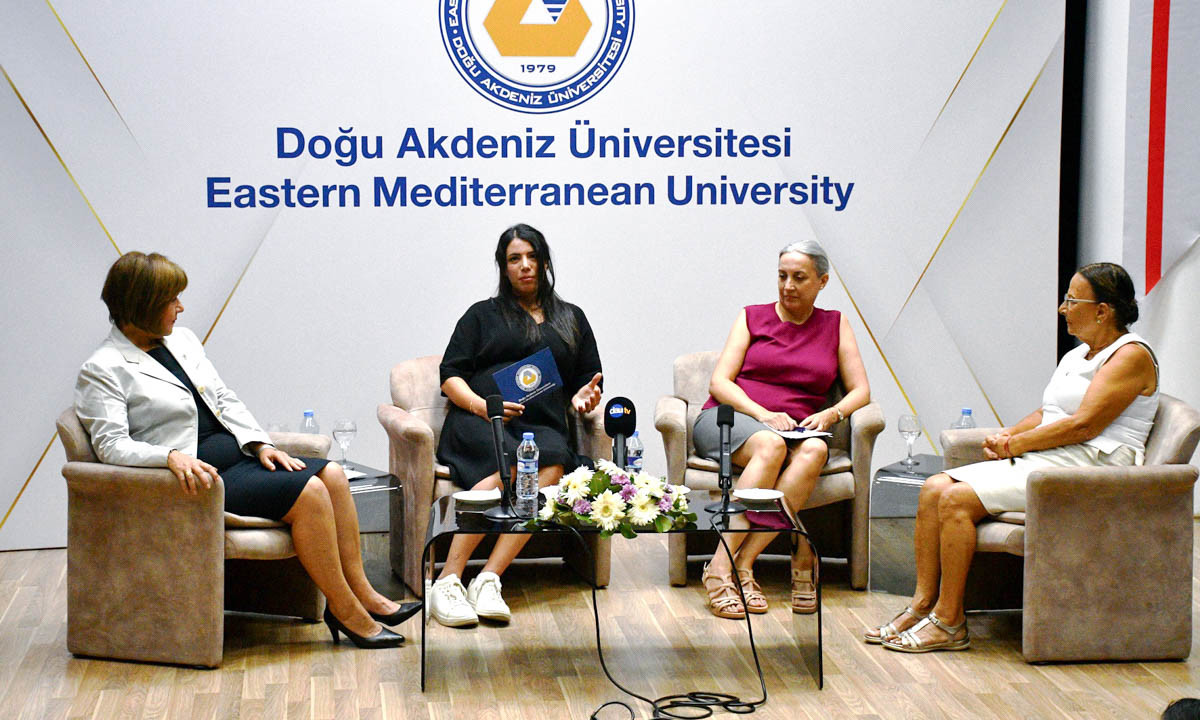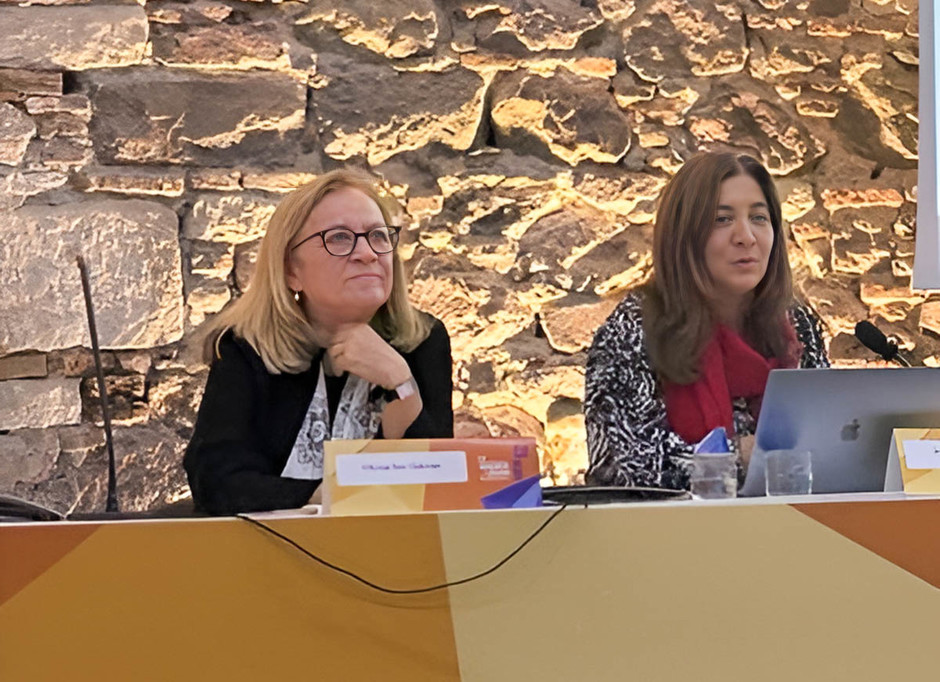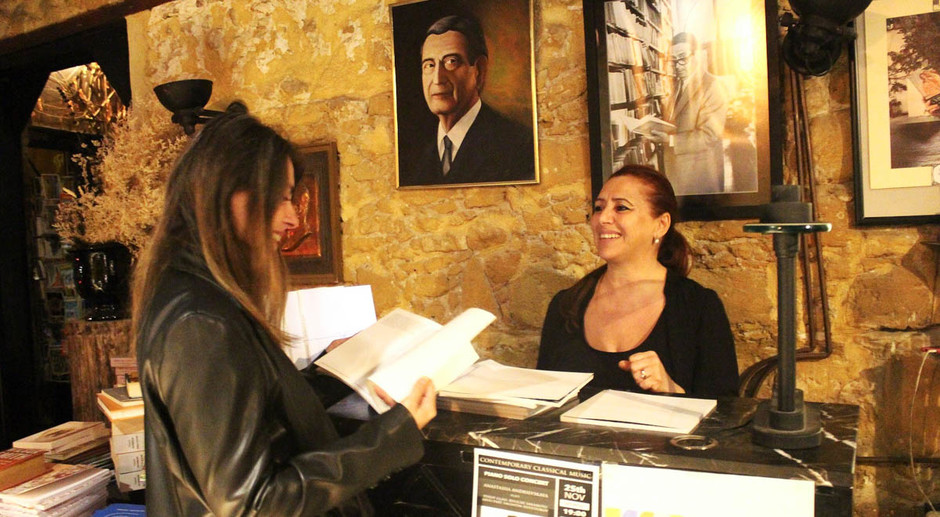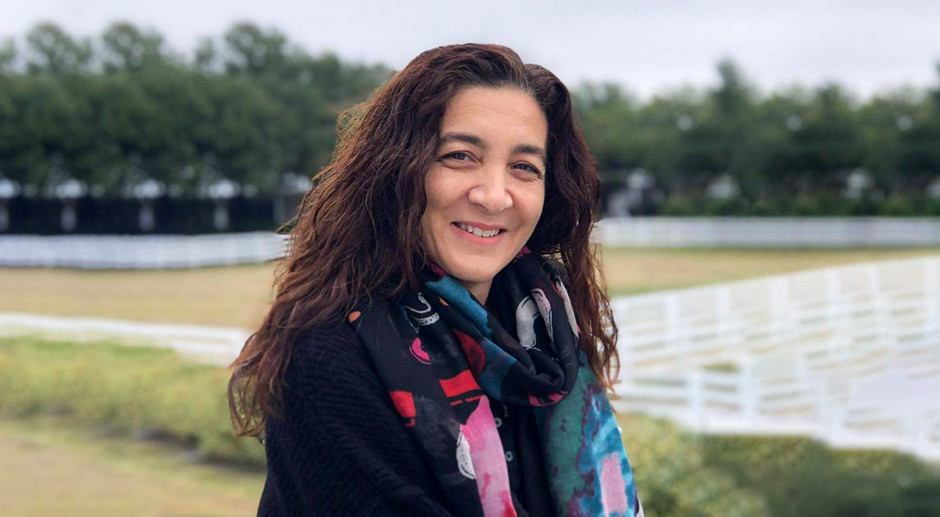
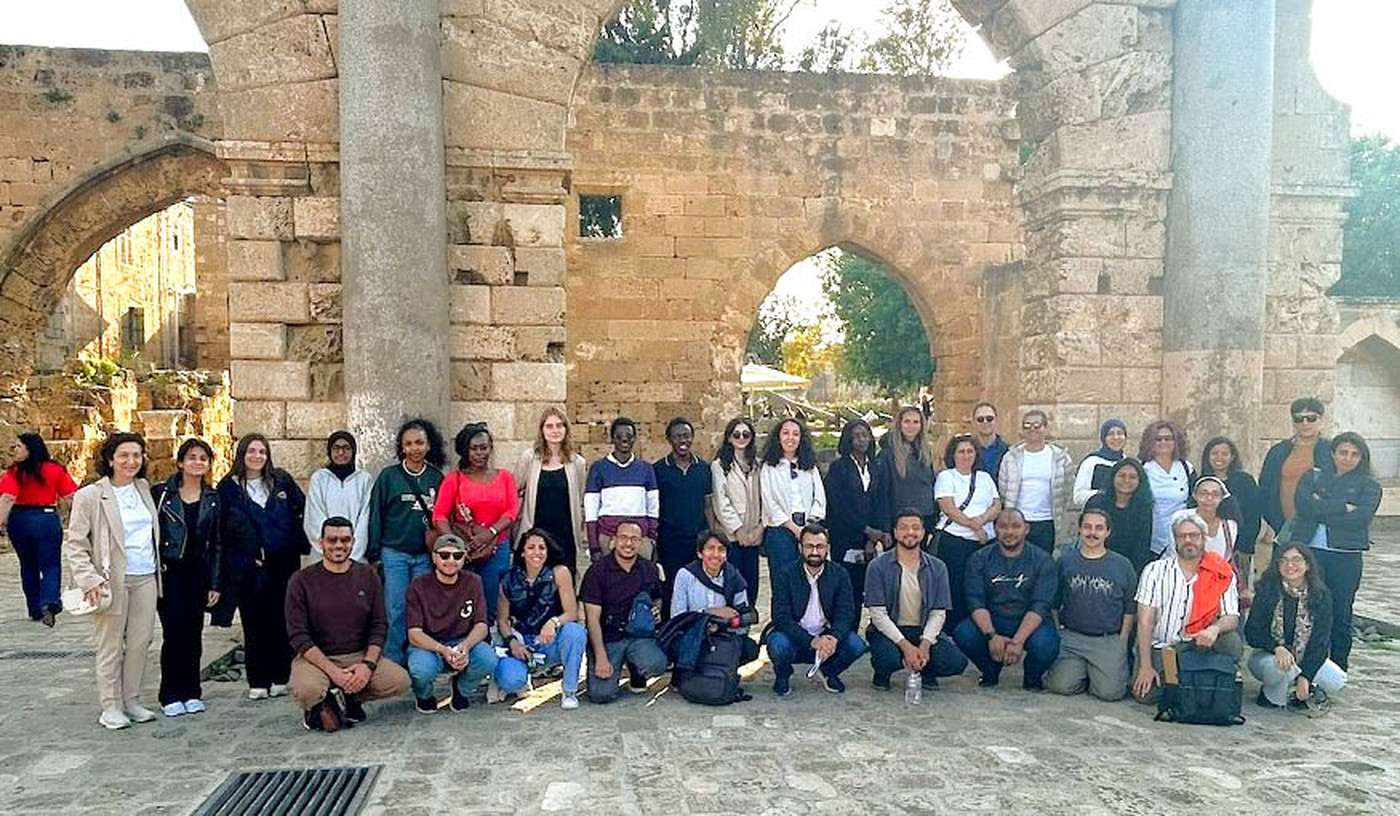
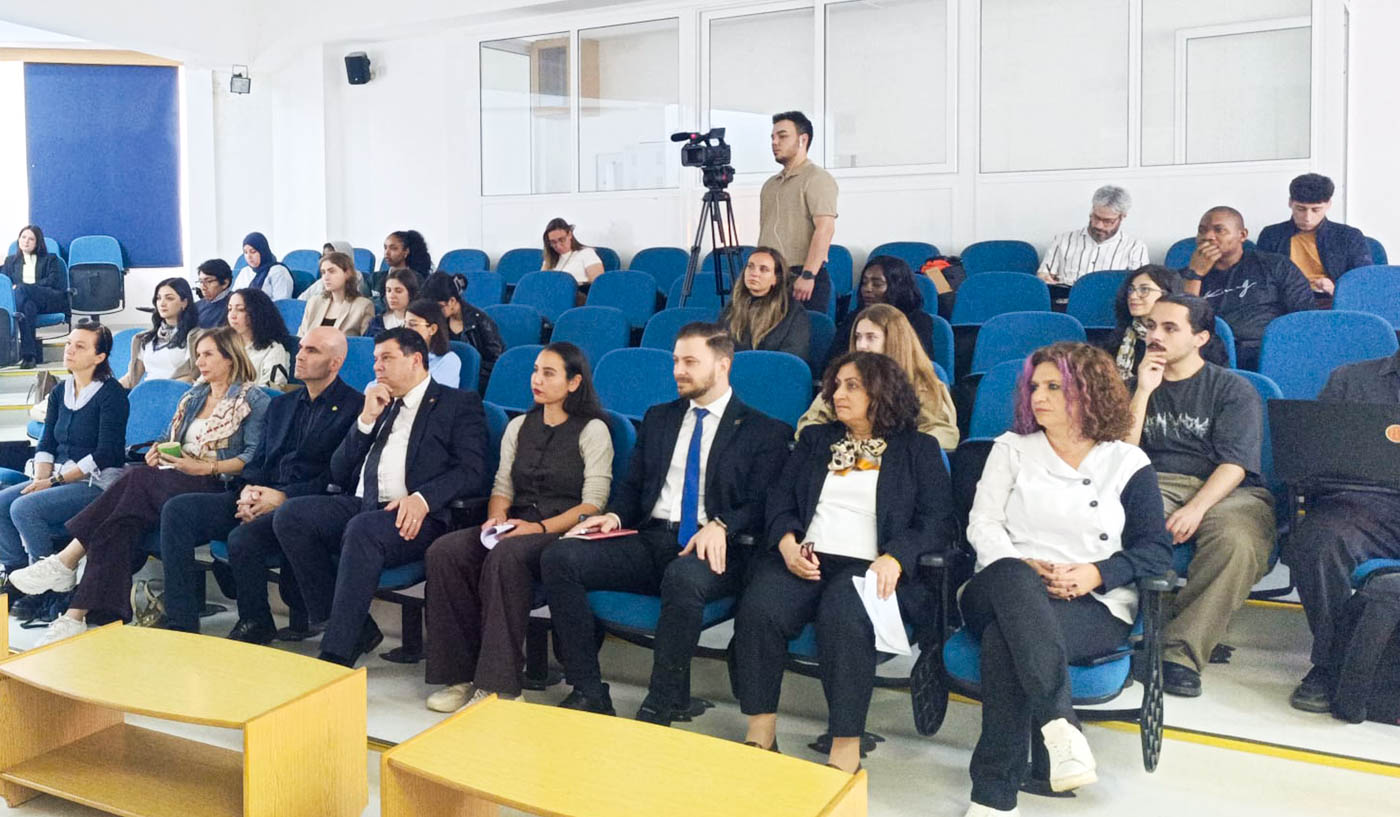
“3rd International School on Urban Morphology (ISUM)” organized by Eastern Mediterranean University (EMU), Urban Research and Development Center (URDC) in collaboration with ISUF – International Seminar on Urban Form and CyNUM – Cyprus Network of Urban Morphology, was successfully held at EMU Faculty of Engineering. Hosting academics, researchers and students from different countries, the event served as an important international gathering on urban morphology.
Chosen from among 130 applicants, 35 young participants representing 22 countries — including 8 African, 6 Asian, 6 European, and 2 American nations — explored the city’s intricate urban morphology through conferences, fieldwork, discussions, and design-oriented explorations. The participants also developed proposals and ideas regarding the city’s future transformation.
The summer school, organized with the aim of enhancing international academic cooperation, received sponsorship support from the Deputy Prime Ministry, Ministry of Tourism, Culture, Youth and Environment of the Turkish Republic of Northern Cyprus, Famagusta Municipality, Cyprus Turkish Construction Contractors Association, DAÜ-SEN, and Cortado-Roots Cafe.
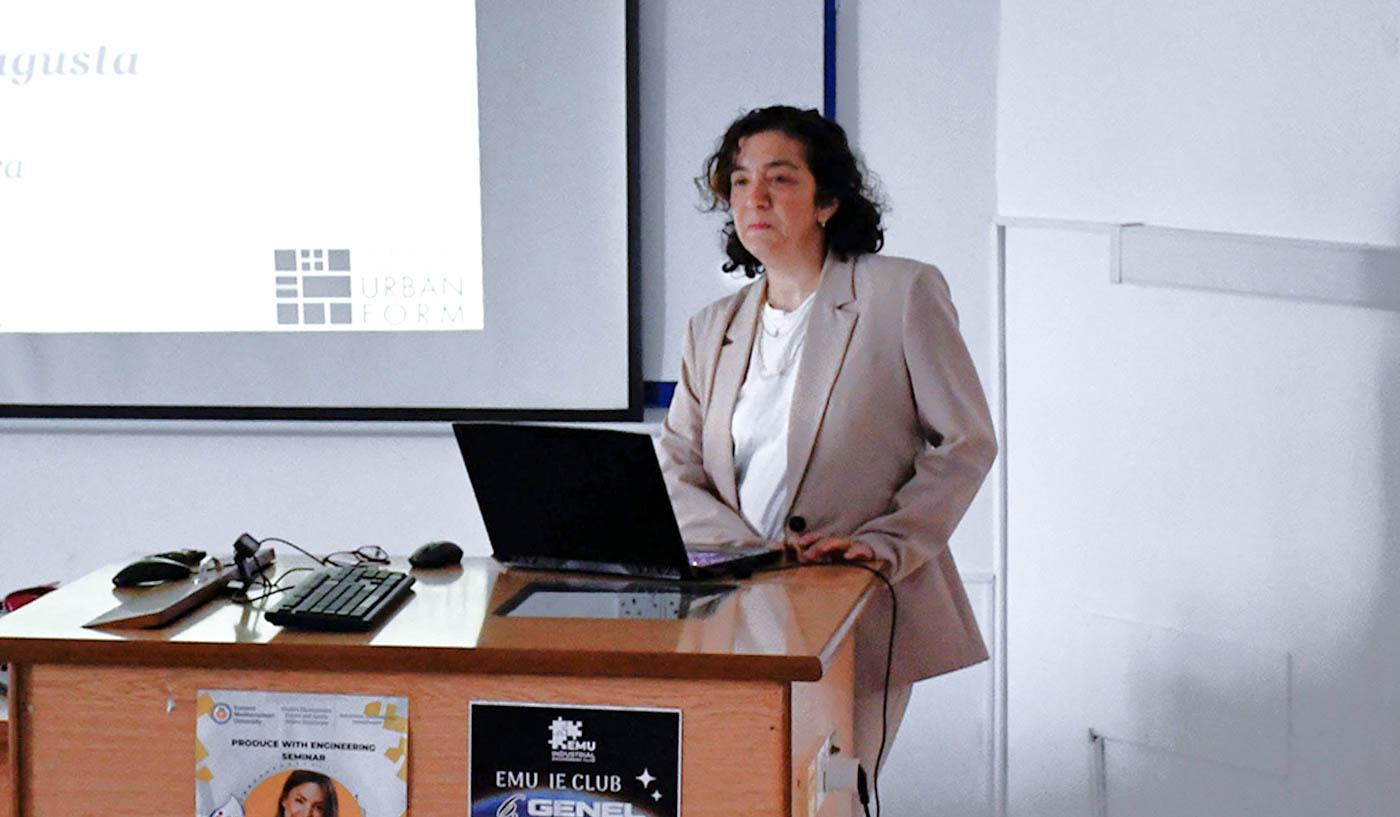
“Extensive Research on the Future of Famagusta”
In her opening remarks, Prof. Dr. Şebnem Hoşkara, Chair of the EMU-URDC, expressed her satisfaction in welcoming participants to both Eastern Mediterranean University and Famagusta, emphasizing that hosting the event was a great privilege. Describing the program as a distinctive platform for exploring the urban fabric of Famagusta within its historical and geographical dimensions, Prof. Dr. Hoşkara stated that 35 students, selected from over 130 applications, would engage in detailed studies on urban morphology throughout a seven-day program consisting seminars, field research, and studio-based activities. Prof. Dr. Hoşkara also noted that the event was realized through the confidence placed in EMU and URDC by the International Seminar on Urban Form (ISUF), together with the contributions of the academic staff, guest speakers, sponsoring organizations, and the EMU Rector’s Office. Emphasizing the importance of the participation of students from various countries, she thanked all attendees for contributing to the success of the program.
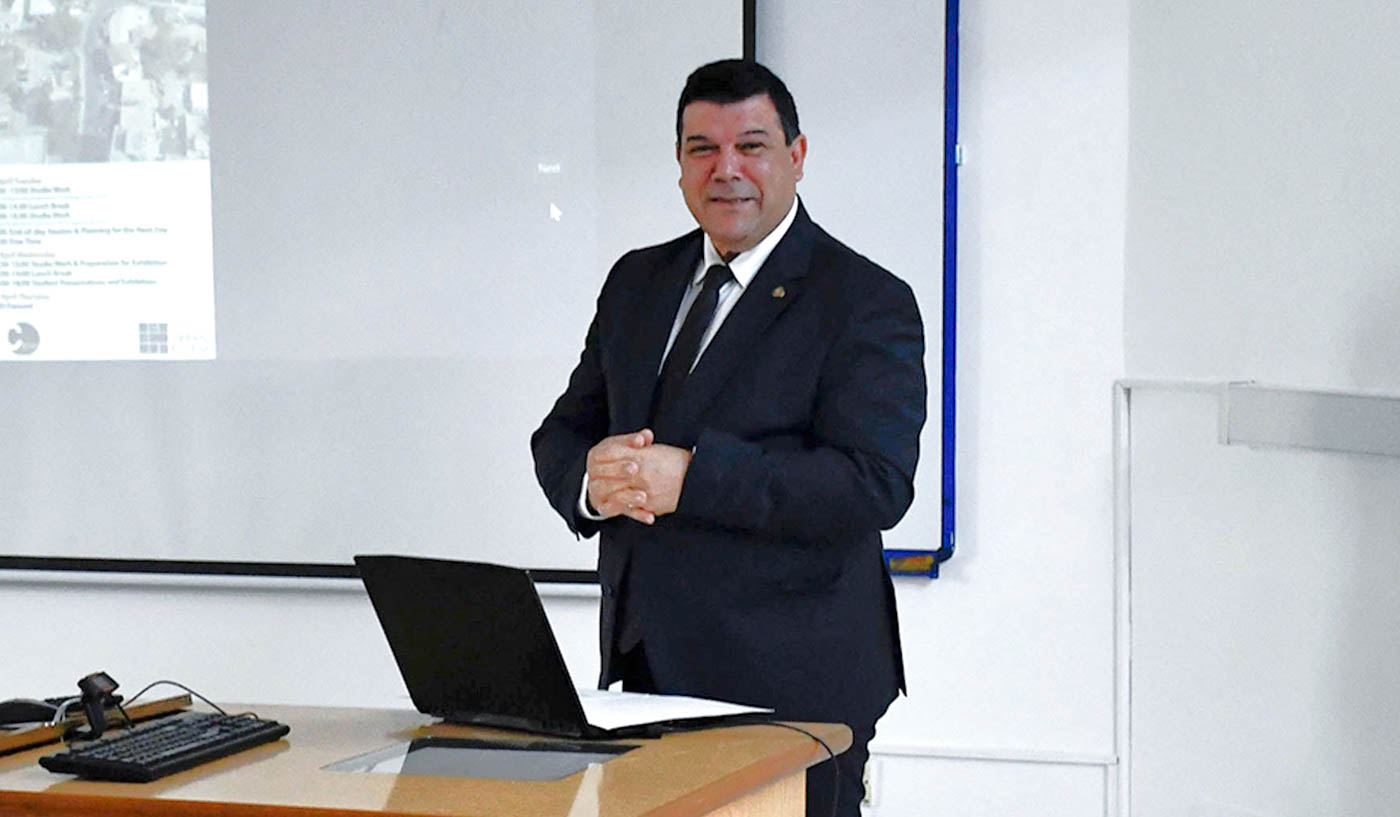
“Universities Are Institutions That Contribute to the Cities They Are Part Of”
In his speech delivered afterwards, EMU Rector Prof. Dr. Hasan Kılıç underlined the importance of hosting such a distinguished academic platform in Famagusta under the auspices of EMU. Prof. Dr. Kılıç remarked that Famagusta, with its rich historical and spatial layers, represents a unique setting for examining the evolution and transformation of cities. He also emphasized that the program offers participants an extensive learning experience by combining theoretical knowledge with practical application. Stressing that universities serve not only as centers of knowledge production but also as institutions that actively contribute to the development of their cities, Prof. Dr. Kılıç stated that the program would foster critical thinking, interdisciplinary cooperation, and the development of new perspectives. He concluded by thanking the academics and students attending from various countries and wished all participants a fruitful week.
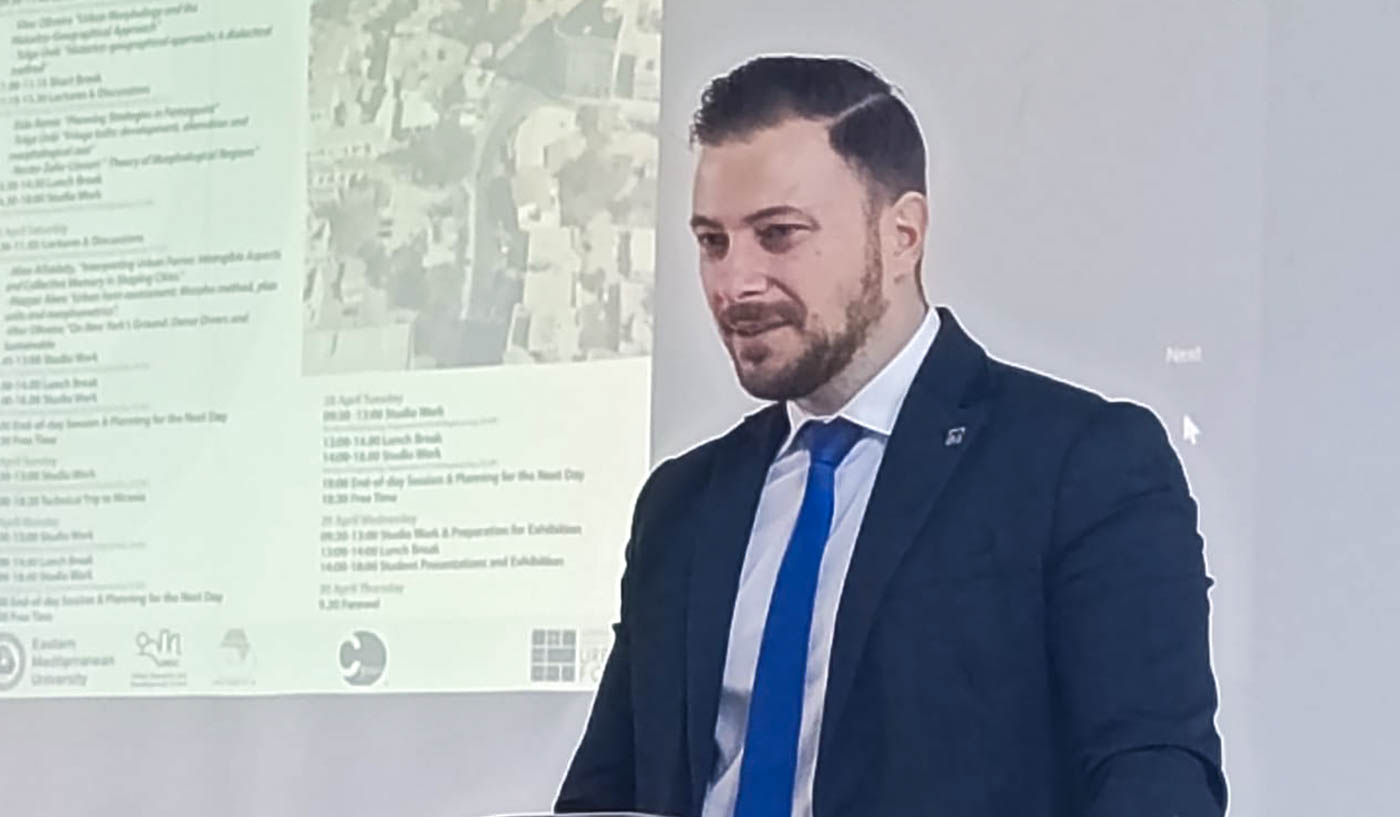
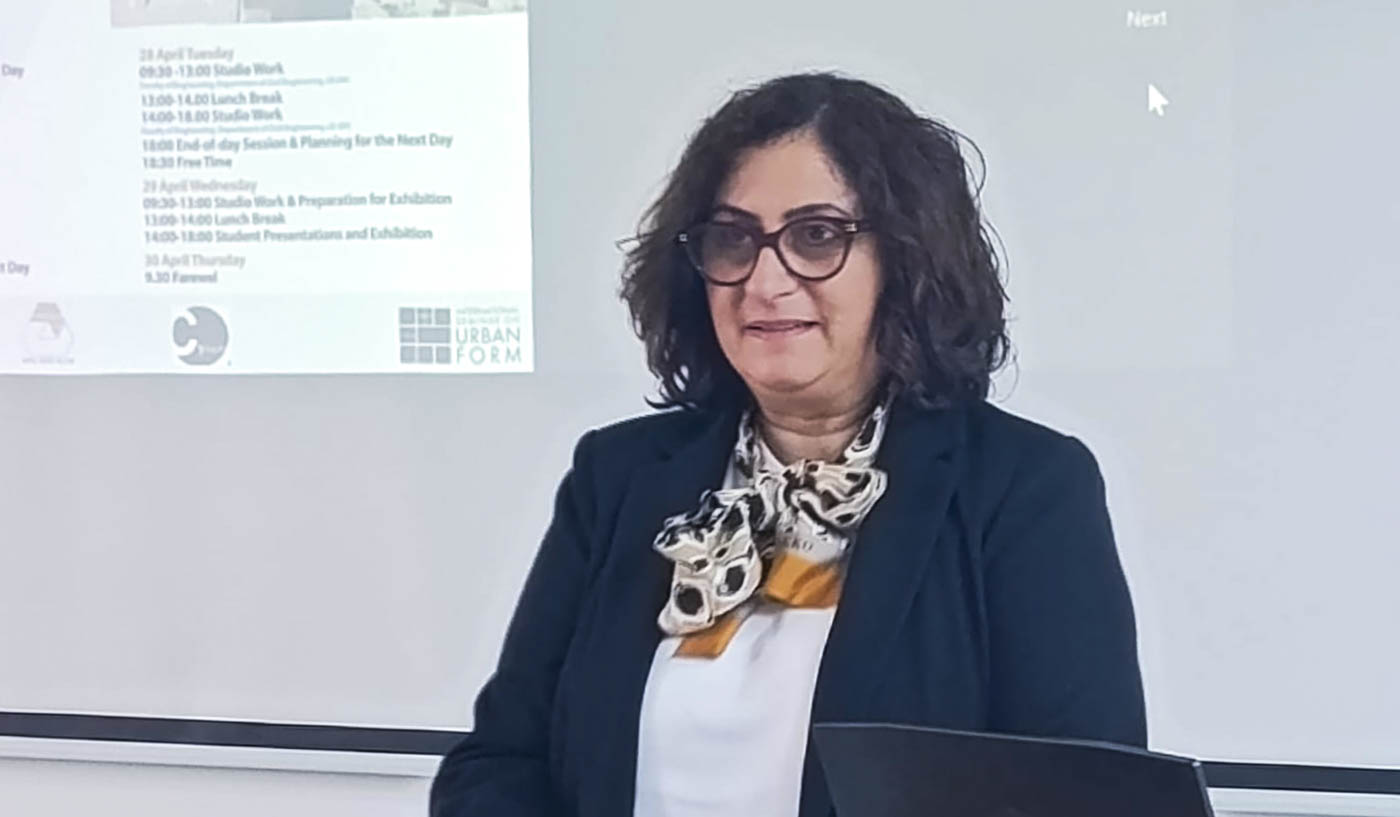
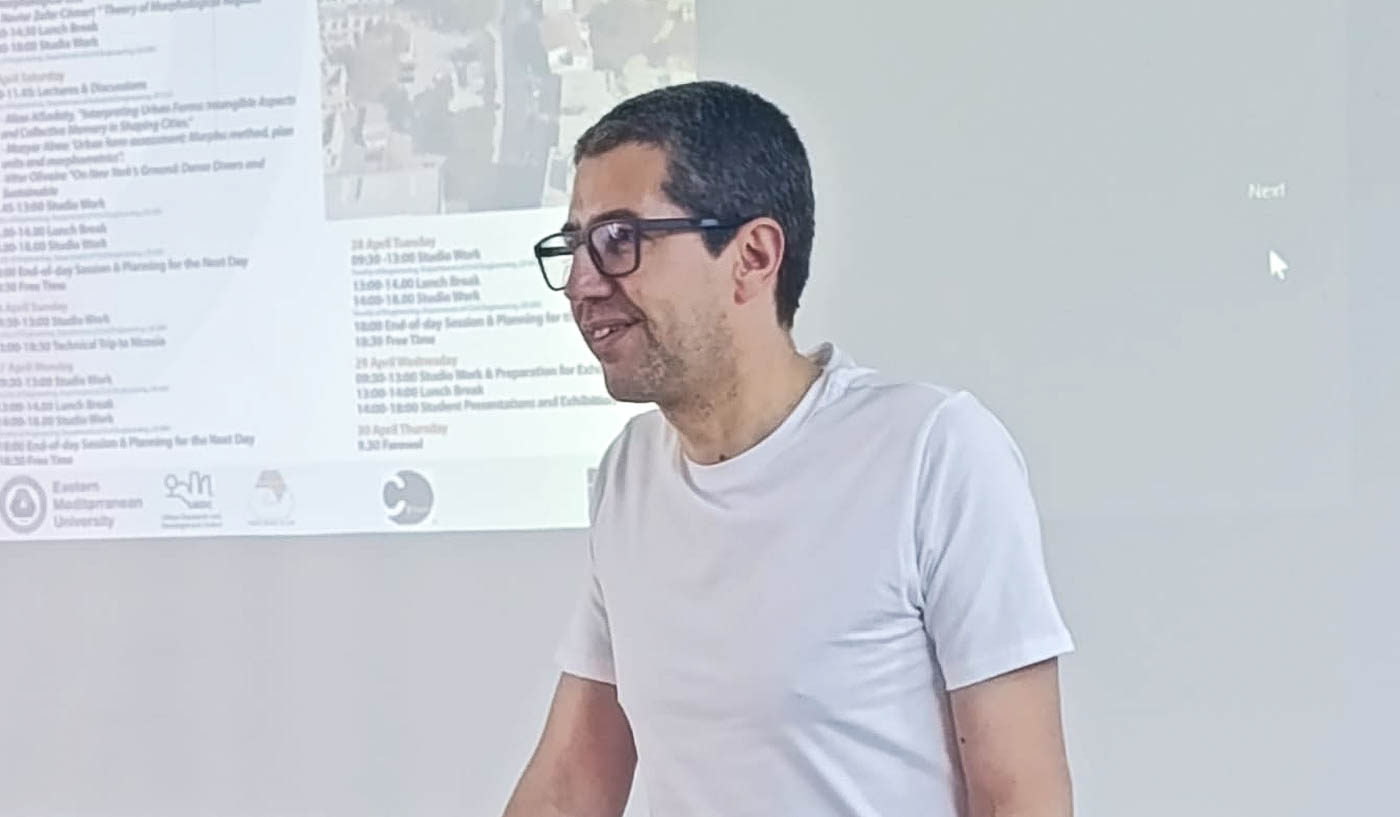
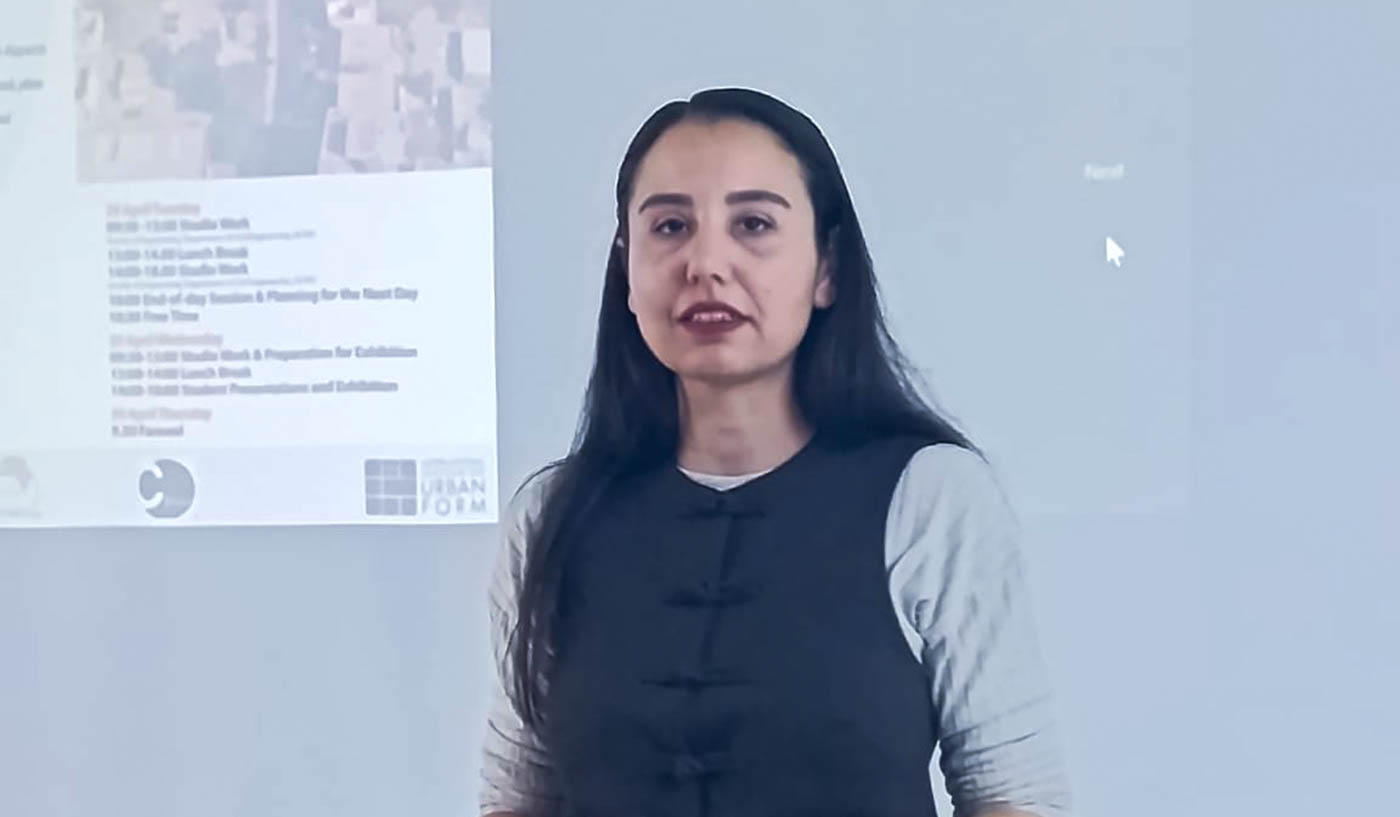
During the opening ceremony of the 3rd International School on Urban Morphology (ISUM), Prof. Vitor Oliveira, Chairperson of International Seminar on Urban Form (ISUF), Assoc. Prof. Dr. Nevter Zafer Cömert, Chairperson of CyNUM and Executive Board Member of the URDC, Onur Olguner, Chairperson of the Chamber of Architects under the Union of the Chambers of Cyprus Turkish Engineers and Architects (KTMMOB), and Laden Güvensoy, Chairperson of the Chamber of Landscape Architects, also delivered speeches and shared their views on the subject. In their remarks, they emphasized the significance of the event in terms of international interaction, the generation of academic knowledge, and its contributions to the city and the country.
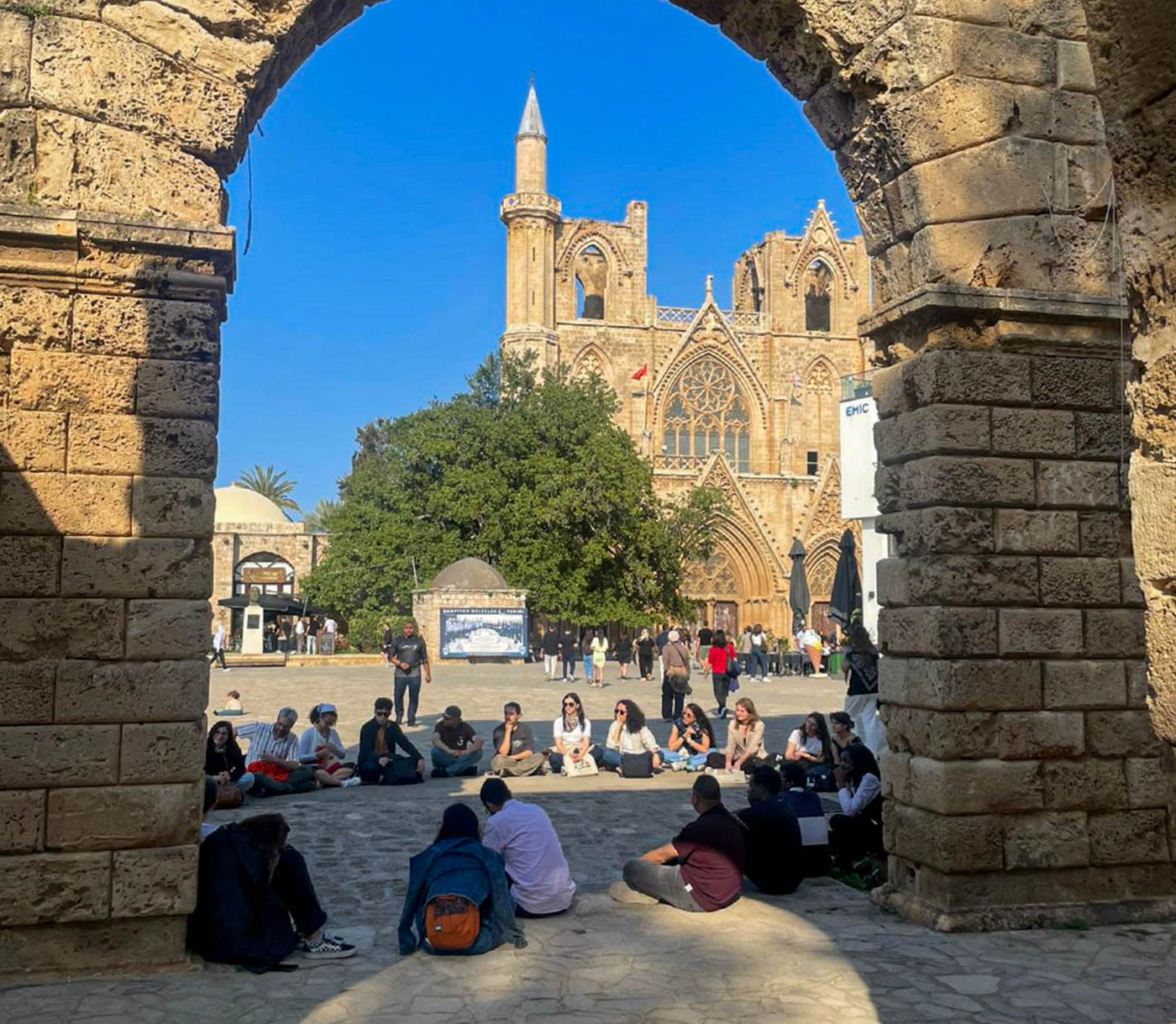
Technical Field Trips, Seminars, and Studio Workshops
Throughout the seven-day international school program, participants took part in technical urban excursions as well as a series of informative seminars and presentations.
Among the presentations delivered during the program, Prof. Dr. Şebnem Hoşkara presented “Urban Form of Cypriot Cities & Urban History of Famagusta,” Dr. Esra Can Akbil addressed “Famagusta as a Fragmented City,” and Assist. Prof. Dr. Nezire Özgece contributed with the presentation titled “The (Incomplete) Port City Image of Famagusta”. During the second day sessions, Prof. Vitor Oliveira, Chairperson of the ISUF, delivered presentations on “Urban Morphology and the Historico-Geographical Approach” and “On New York’s Ground: Dense, Diverse and Sustainable.” Prof. Dr. Tolga Ünlü presented “Historico-geographical Approach: A Dialectical Method” and “Fringe Belts: Development, Alienation and Morphological Cost.” In addition, Dr. Elda Ramiz discussed “Planning Strategies in Famagusta,” while Assoc. Prof. Dr. Nevter Zafer Cömert delivered a presentation titled “Theory of Morphological Regions.” On the third day of the program, Assoc. Prof. Dr. Aliaa AlSadaty contributed with the presentation “Interpreting Urban Forms: Intangible Aspects and Collective Memory in Shaping Cities,” while Dr. Mazyar Abee delivered “Urban Form Assessment; Morpho Method, Plan Units and Morphometrics.”
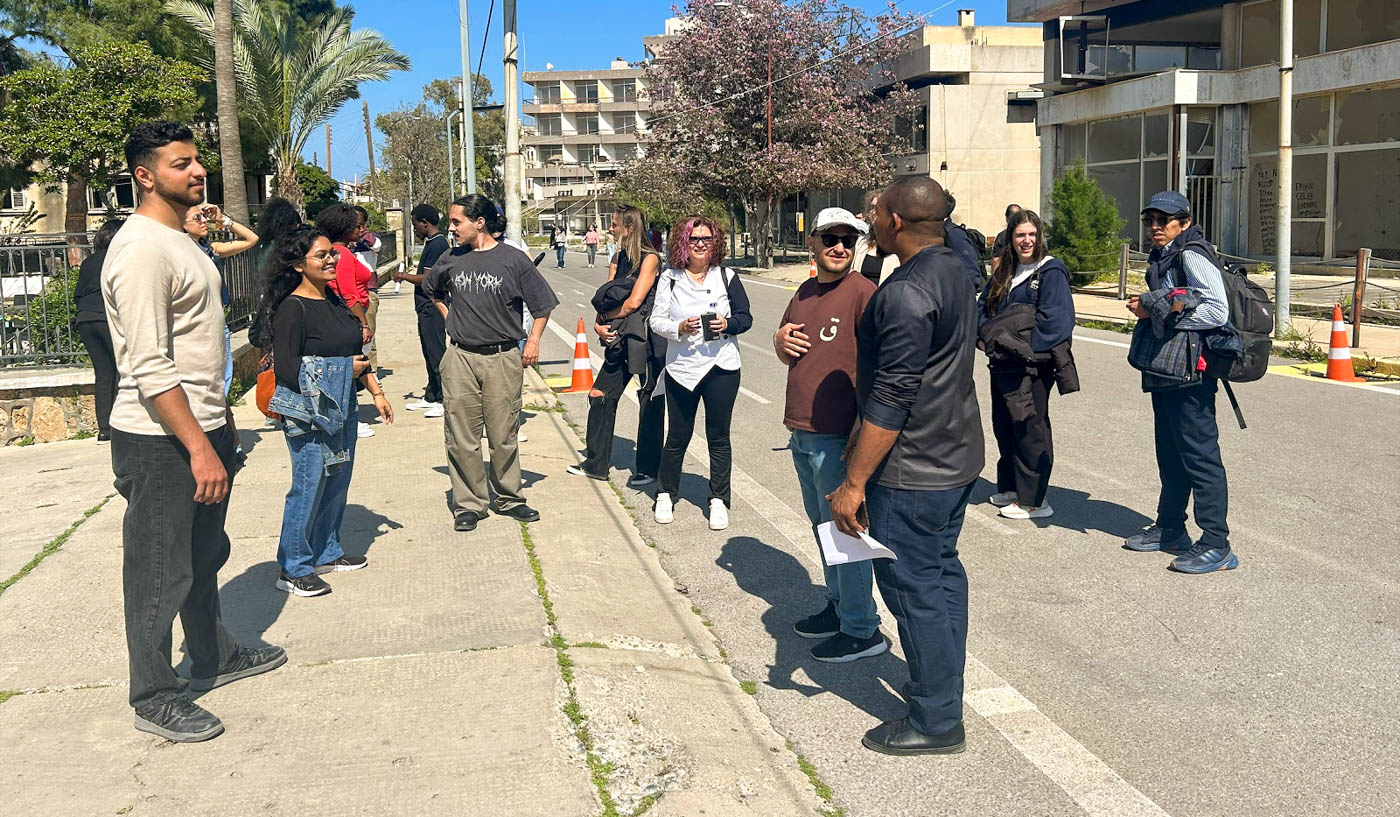
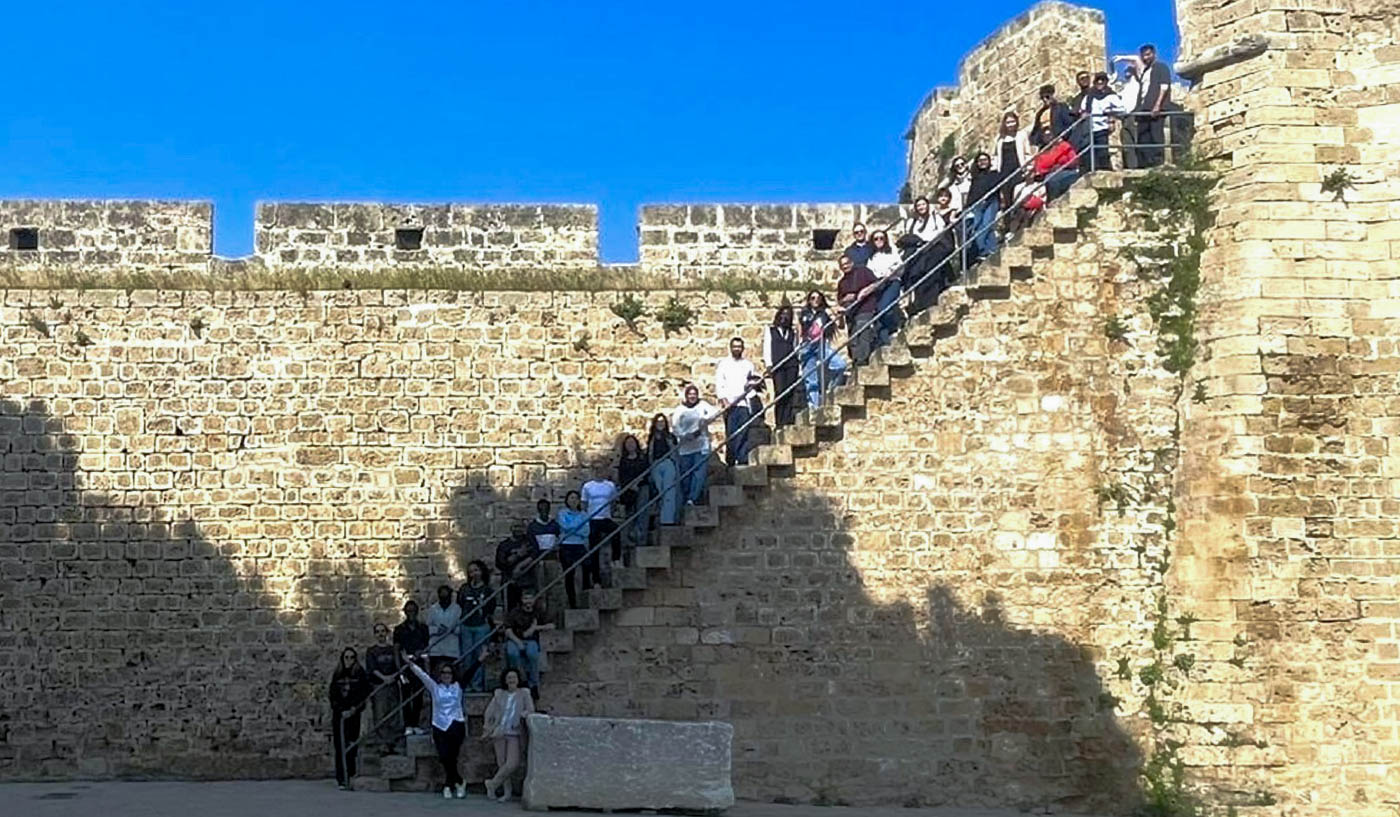
Throughout the program, the presentations offered students extensive knowledge on urban form, historical transformation processes, planning perspectives, and the methods utilized within urban morphology studies. Supported by technical field visits to various parts of Famagusta — especially the Walled City, Varosha, and the Salamis Ruins — as well as intensive studio-based work, participants were able to strengthen their theoretical understanding through hands-on practice and on-site observation.
In addition, a technical excursion to Nicosia was organized within the scope of the event, providing participants with the opportunity to explore different urban textures and spatial characteristics in person. The program concluded with presentations in which students shared their analyses and proposals concerning Famagusta. Through this international organization, Famagusta once again emerged as a “living laboratory” for urban research, critical thinking, and collective urban imagination, while Eastern Mediterranean University reaffirmed its role as a university that actively contributes to both its city and the country.