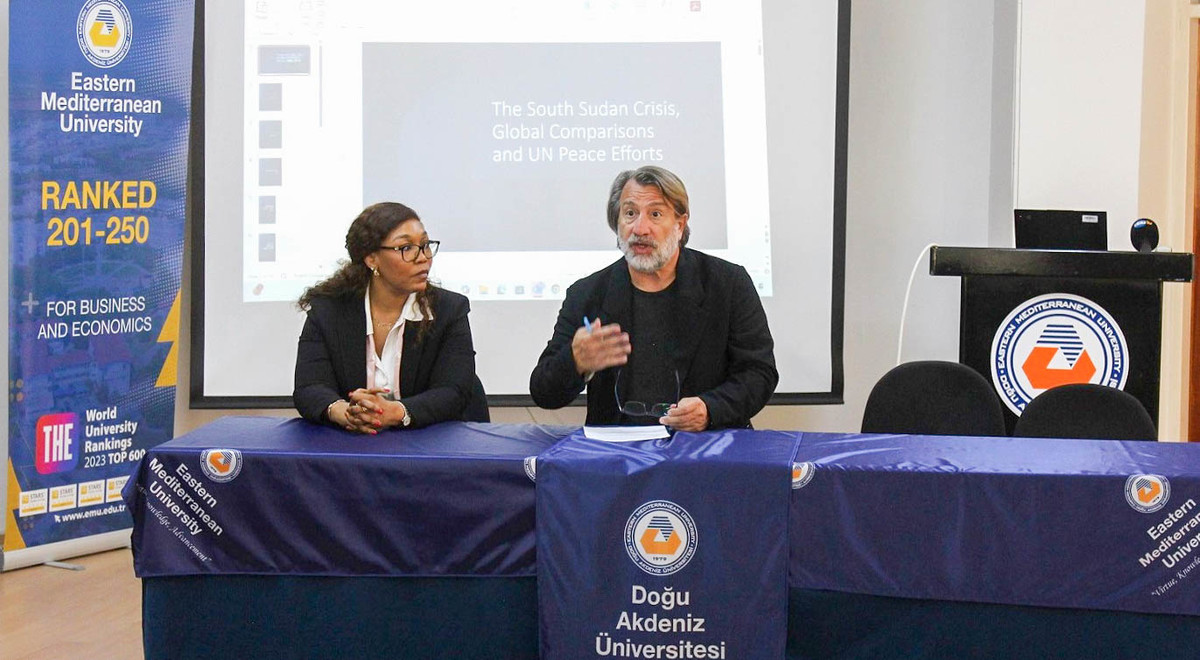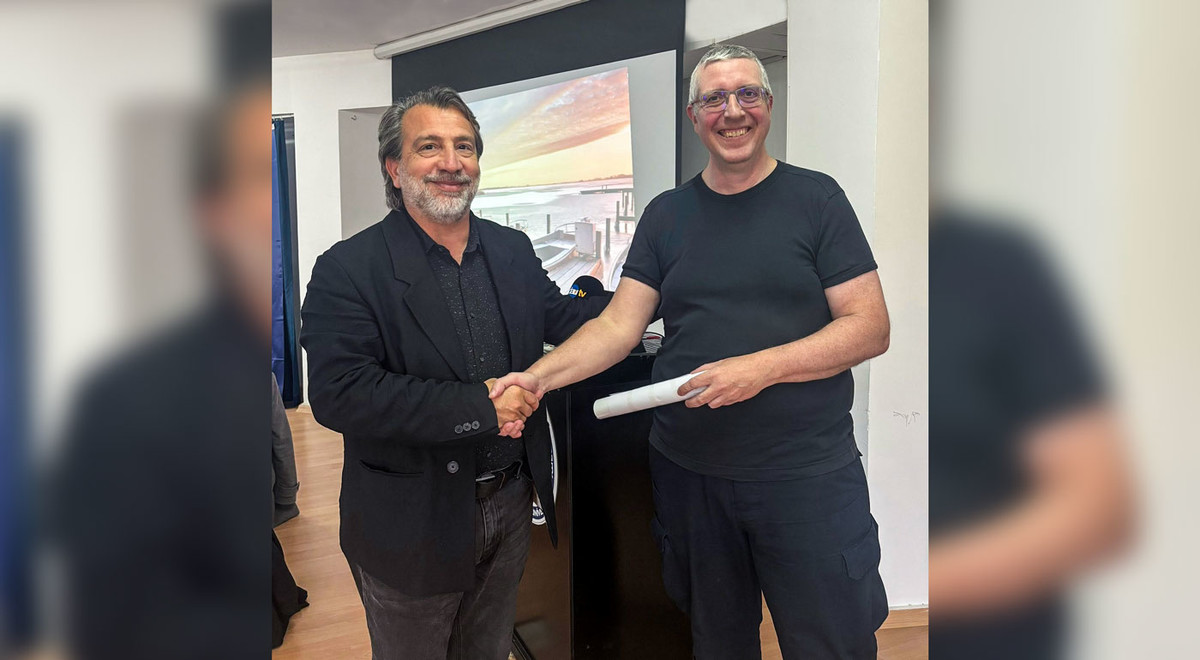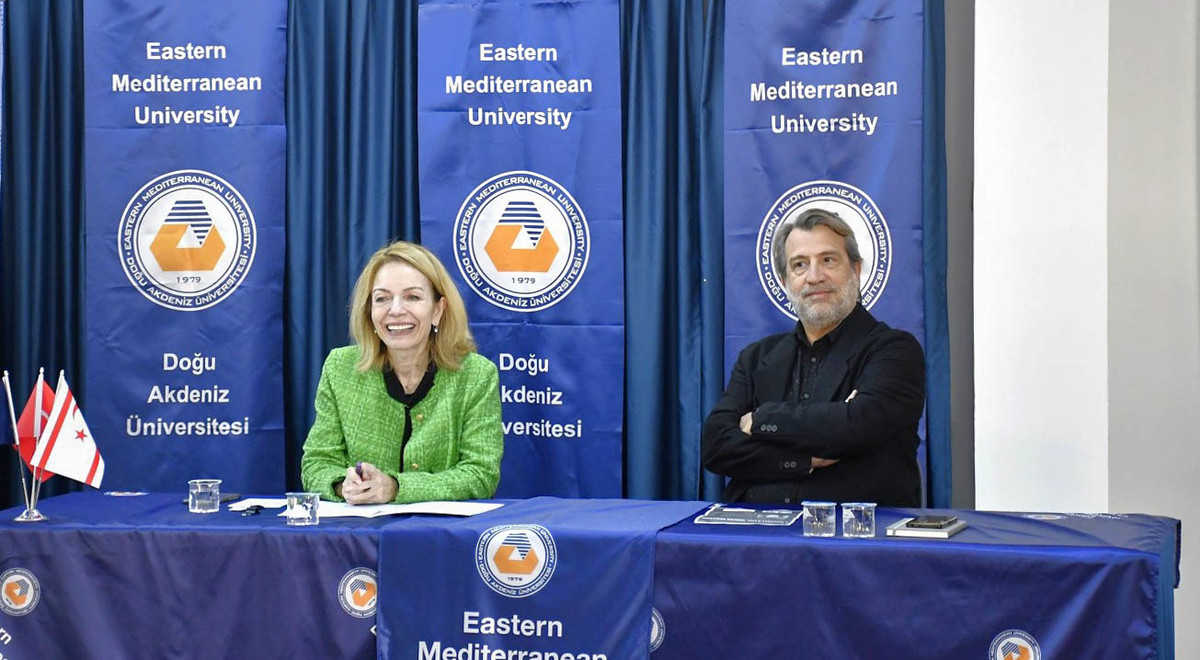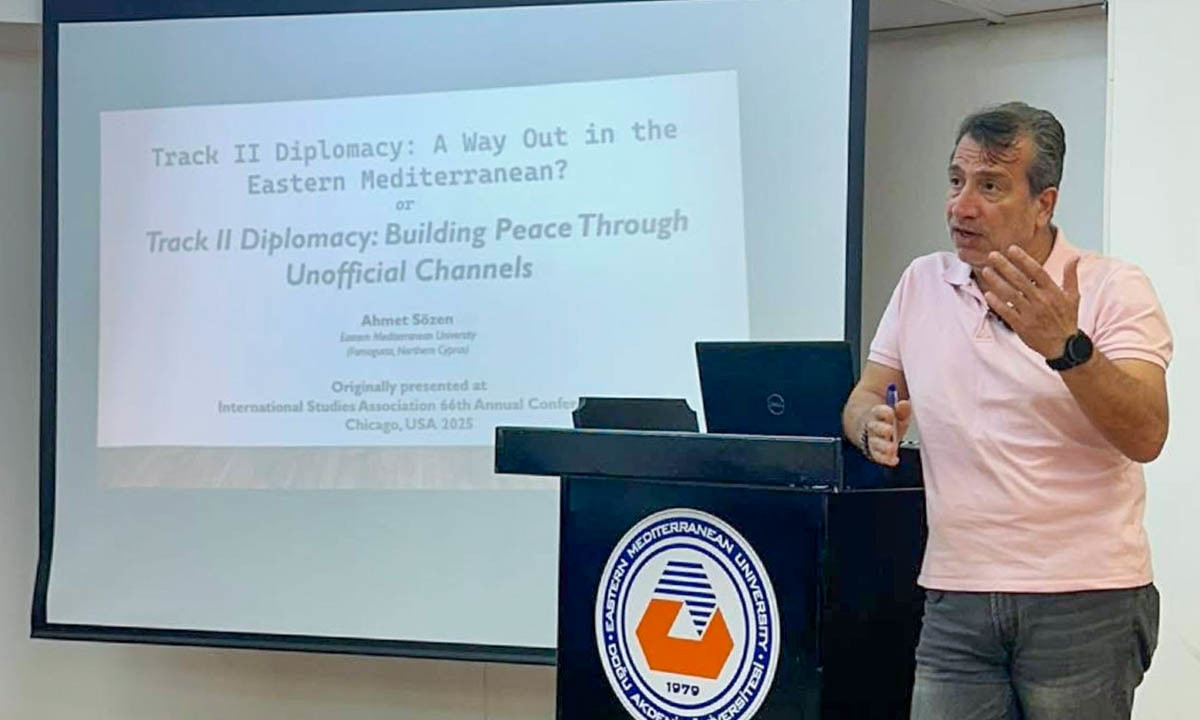

Eastern Mediterranean University (EMU), Cyprus Policy Center (CPC) and Faculty of Business and Economics, Department of Political Science and International Relations co-organized a seminar titled “Inclusive Peace”. The event commenced with an opening speech delivered by Prof. Dr. Ahmet Sözen, EMU CPC Chairperson and Head of Department of Political Science and International Relations. Then, panellists Dr. İpek Borman and Department of International Relations student Aysel Rahmanova provided insights on the contents of the event.
In his speech, Prof. Dr. Ahmet Sözen discussed the role of Track II diplomacy in conflict resolution, noting its distinction from Track I diplomacy conducted by official actors such as heads of state and diplomats. He stressed the importance of taking into account the needs and interests of all parties involved. Furthermore, Prof. Dr. Sözen referenced UN Security Council Resolution 1325 (UNSCR 1325), highlighting the need to include groups that have historically been excluded from peace processes.

Then seminar continued with a speech by EMU International Relations Department student Aysel Rahmanova who talked about her internship process last summer in the Nicosia buffer zone and her observations of conflict resolution practices in Northern Ireland and South Africa. Rahmanova analysed the effects of Track II diplomacy in these contexts and discussed how the lessons learned might be applied to the Cyprus issue. Moreover, she emphasized key aspects such as international ownership, conditional inclusivity, technical drafting processes, and civil society engagement in the examples she examined.
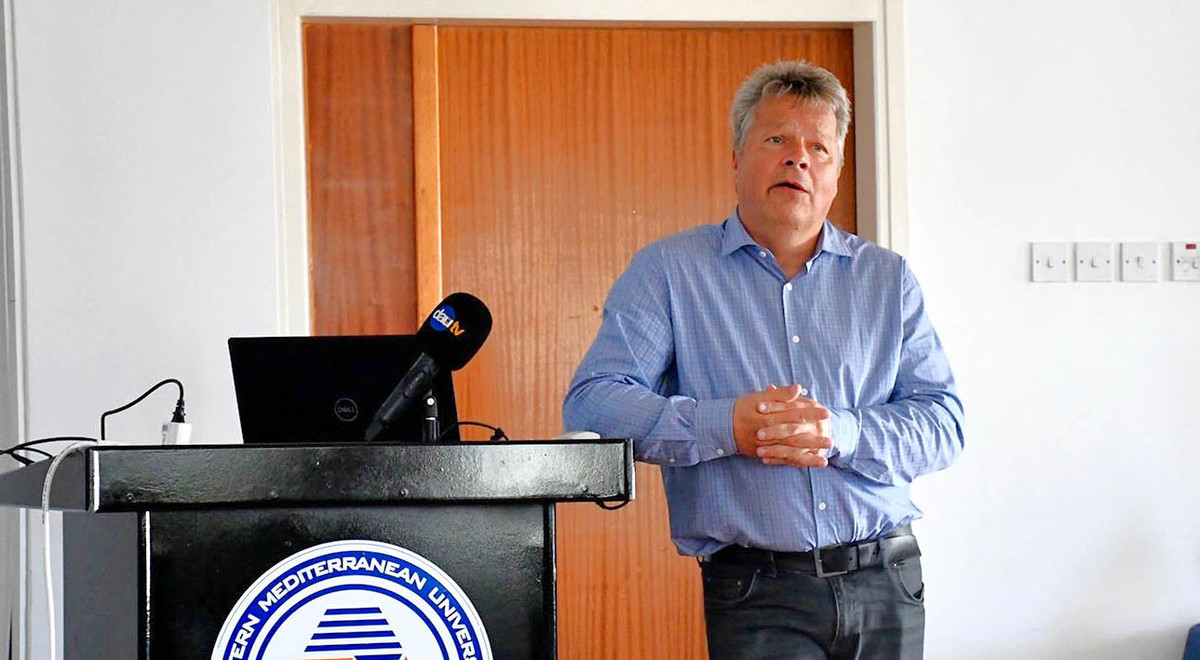
The final speaker of the event, Dr. İpek Borman, who spent ten years as a member of the Turkish Cypriot negotiation team, presented on the Cyprus issue and gender policies. She highlighted the importance of gender in understanding power dynamics and pointed out the underrepresentation of women in high-level political positions in Cyprus. Dr. Borman also noted that gender-sensitive and inclusive negotiation processes are still underdeveloped, and criticized the tendency to prioritize security issues over gender equality. She stressed that the United Nations should strengthen its efforts to fully integrate gender considerations into all policies.
Receiving high participation, the seminar concluded with a question-answer session in which the speakers, moderated by Prof. Dr. Ahmet Sözen, discussed Track-II diplomacy and the impact of gender equality on Cyprus issue.