
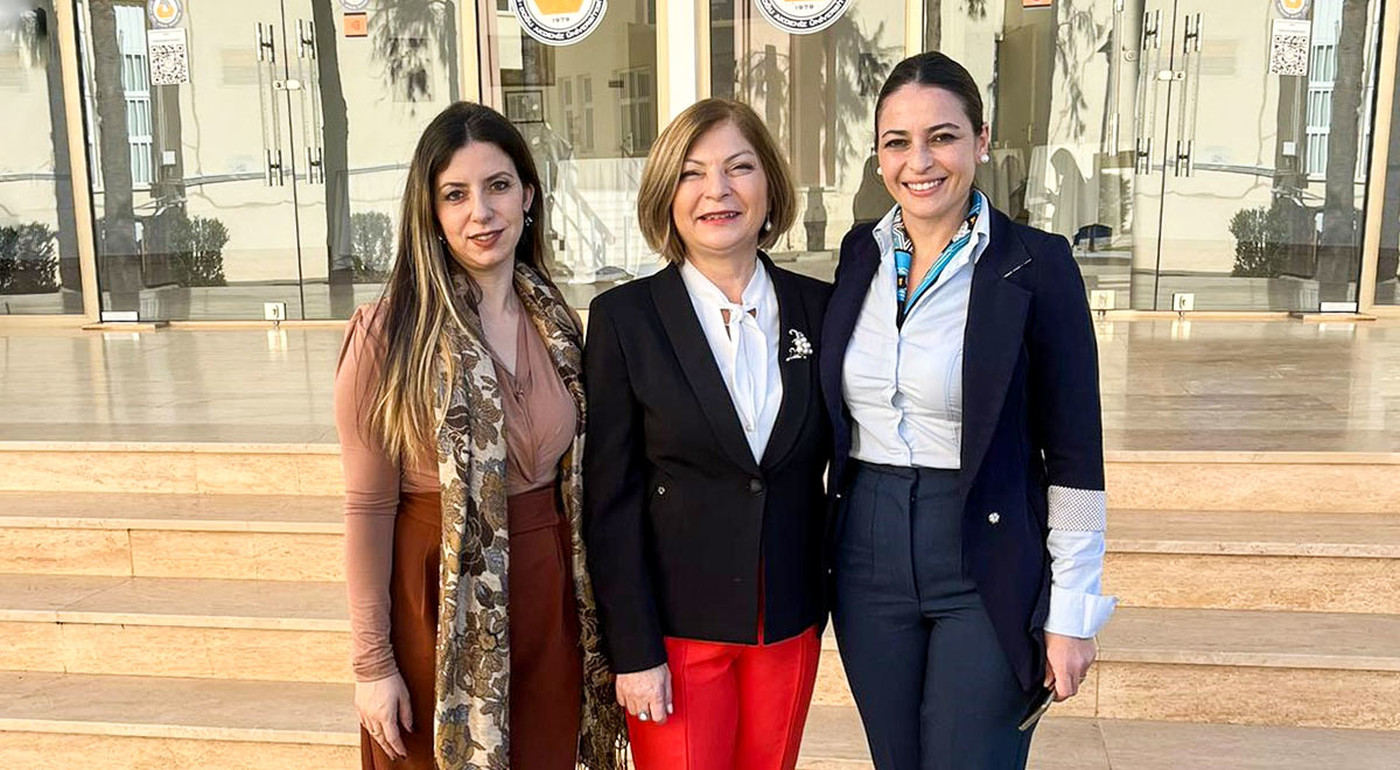
EMU Health Sciences Faculty, Physiotherapy and Rehabilitation Department, Pediatric Unit released a statement on 6 October – World Cerebral Palsy Day. The statement by Health Sciences Faculty members and Department of Physiotherapy and Rehabilitation, Pediatric Unit members Prof. Dr. Emine Handan Tüzün, Assoc. Prof. Dr. Zehra Güçhan Topcu and Assist. Prof. Dr. Ünal Değer, reads as follows:
“Building a More Inclusive World by Embracing Our Differences in Cerebral Palsy”
Every individual has their own unique story, dreams, talents, and expectations of life. Some of us move around by walking, while others use wheelchairs. Some express themselves through speech, while others communicate in different ways. Our differences are a natural part of being human. What truly matters is creating a world where these differences do not lead to inequality or exclusion.
Every year, World Cerebral Palsy Day, observed on 6 October, brings us together around a shared message. This year, the theme “Unique and United” once again reminds us of the importance of unity in diversity. This message calls on us to recognize the diverse experiences, priorities, and aspirations of individuals with cerebral palsy and to embrace these differences as a shared responsibility in building a more inclusive society. After all, every individual is unique, and no diagnosis can ever tell the whole story of a person’s life.
“Cerebral Palsy Is More than Just a Diagnosis”
Cerebral palsy is a permanent condition that affects the development of movement and posture as a result of a disturbance in the developing brain. However, a diagnosis of cerebral palsy alone does not define who a person is, what they are capable of achieving, or the kind of life they can lead. While some individuals with cerebral palsy can walk independently, others may rely on assistive devices. Some express themselves through speech, while others use alternative and augmentative communication methods. Cognitive abilities, daily living skills, communication patterns, and support needs also vary from one individual to another.
For this reason, it is important not to define individuals with cerebral palsy solely by their diagnosis, the way they move, or the assistance they may require. Like everyone else, they are individuals with their own interests, preferences, goals, and dreams. They have the same right as anyone else to play, make friends, receive an education, pursue a career, participate in social life, and make decisions about their own lives.
Being unique means recognizing and respecting each individual’s distinct characteristics and needs. Being united, on the other hand, means taking collective responsibility for building a society in which everyone enjoys equal rights and opportunities, without seeking to eliminate the differences that make each person unique.
“Barriers Are Not Always Within Individuals, but Often in the World around Them”
The challenges experienced by individuals with cerebral palsy are not solely the result of their personal circumstances or abilities. Physical and social barriers, such as inaccessible pavements, school buildings that fail to accommodate diverse needs, limited transportation options, restricted access to assistive technologies, and societal prejudices, can significantly affect their everyday lives and limit their opportunities for full participation in society.
Simply being able to enroll in school does not necessarily ensure that a child can benefit from educational opportunities on an equal footing with their peers. Similarly, the opportunity to apply for a job does not mean that the workplace provides an accessible and supportive environment suited to an individual’s needs. In the same way, the existence of healthcare services does not necessarily guarantee that everyone can access and benefit from them equally.
Therefore, inclusivity goes beyond simply acknowledging and accepting individual differences. It also requires ensuring that these differences do not become sources of exclusion or unequal opportunities. Equality is not merely about providing everyone with the same resources or opportunities; it also involves ensuring that individuals have access to support tailored to their specific needs and can participate meaningfully in all aspects of life. Accessibility is not a privilege, but a fundamental prerequisite for equal participation in society.
“Physiotherapy and Rehabilitation: The Goal Is Not Merely Movement, but Active Participation in Life”
Early diagnosis, regular monitoring of development, and access to healthcare and rehabilitation services tailored to individual needs are essential in the management of cerebral palsy. Physiotherapy and rehabilitation play a vital role in improving motor skills, promoting functional independence, preventing secondary musculoskeletal complications, and enhancing participation in everyday life. However, the success of rehabilitation cannot be measured solely by whether a child is able to walk. A child’s ability to play with friends, take part in school activities, express their own preferences, and achieve greater independence in daily life is just as important as improvements in their motor abilities.
Throughout this process, close collaboration among physiotherapists, physicians, occupational therapists, speech and language therapists, special education specialists, and other healthcare professionals is essential. Equally important is ensuring that not only families but also children themselves are actively involved in setting goals and making decisions, in ways that are appropriate to their age, developmental stage, and communication abilities. After all, person-centered rehabilitation is not about applying the same approach to everyone, but rather about recognizing and responding to each individual’s unique needs, preferences, and aspirations. The ultimate goal is not to make individuals conform to predetermined expectations, but to provide them with the support they need to realize their full potential and participate meaningfully in everyday life.
“Supporting Families, Listening to Children’s Voices”
Cerebral palsy is a condition that shapes not only the lives of individuals diagnosed with it but also those of their families. From navigating the diagnosis and accessing rehabilitation services to securing educational opportunities and addressing concerns about the future, families may face a wide range of responsibilities. It is therefore essential to ensure that families have access to accurate information, psychosocial support, accessible healthcare services, and reliable professional guidance.
However, supporting families should never mean overlooking the voices of the children themselves. Children’s views should be heard, their preferences respected, and their involvement in decisions affecting their own lives encouraged to the greatest extent possible. It is important to recognize that communication extends far beyond spoken language. Body movements, gestures, and augmentative and alternative communication (AAC) tools can also enable individuals to express themselves and make their voices heard. We must remember that every child is much more than a recipient of rehabilitation services. They are, first and foremost, children who want to play, learn, explore, make friends and experience happiness.
Awareness is Our Collective Responsibility
The purpose of World Cerebral Palsy Day is not merely to raise awareness and provide information about cerebral palsy, but also to translate that awareness into meaningful action and tangible change. Achieving this requires creating opportunities for individuals with cerebral palsy to share their personal experiences, express their priorities, and voice the changes they wish to see in society.
As healthcare professionals, we have a responsibility to provide evidence-based, person-centered services that address individual needs and recognize the importance of lifelong support. At the Pediatric Physiotherapy and Rehabilitation Unit of the EMU Department of Physiotherapy and Rehabilitation, we are committed to promoting equal opportunities for children with diverse needs to participate fully in educational activities and social life.
Educators should strive to create inclusive learning environments where all students have equal opportunities to learn and develop their potential. Local authorities and relevant institutions must work towards ensuring that physical environments, transportation systems, and essential services are accessible to everyone. As a society, we must learn to look beyond what individuals may be unable to do and instead recognize their abilities, choices, achievements, and valuable contributions to society.
Most importantly, when discussing issues concerning individuals with cerebral palsy, we must move beyond simply speaking on their behalf. We need to create meaningful opportunities for them to make their voices heard, express their perspectives, and actively participate in decision-making processes. True inclusion is not just making room for a community, but also about empowering its members to shape their own future.
“United Not Just for One Day, but Every Day”
6 October offers us all an opportunity to reflect on an important question: What changes do we expect individuals with cerebral palsy to make in order to navigate everyday life more easily? More importantly, what changes can we make ourselves and within the environments around us to improve their quality of life?
Perhaps it means making a school entrance accessible, providing a child with an appropriate communication aid, or simply taking the time to ask them what they want…
Change often begins with seemingly small steps that can make a profound difference in an individual’s life. Turning these individual efforts into widespread and lasting change requires collective action by individuals, families, healthcare professionals, educators, institutions, and society as a whole. Rather than defining the lives of individuals with cerebral palsy solely by the challenges they face, we must highlight their experiences, achievements, aspirations, and contributions to society. We must approach them with respect rather than pity, promote equality rather than exclusion, and embrace understanding of individual differences rather than making assumptions about their abilities or needs.
On this World Cerebral Palsy Day, let us embrace the message “Unique and United” not merely as a slogan, but as a shared responsibility reflected in our everyday actions. Every individual is unique, and every voice deserves to be heard and valued. A more inclusive world becomes possible when we embrace our differences, respect everyone's rights, and work together towards a society where everyone has the opportunity to thrive.